
Understand Bitcoin Pokies Before You Deposit
See how Bitcoin relates to free and real-money play, and what can affect deposits, bonus terms, withdrawals and first-time verification.

Table of Contents
Table of Contents
- Bitcoin Pokies and the Difference Between Free and Real-Money Play
- Game Credits and Their Bitcoin Value
- Bonus Terms and Disputes Across Games
- The Australian Legal Context for Real-Money Pokies
- Bitcoin Deposits and Deposit-Recognition Problems
- Setting Up Bitcoin for Casino Payments
- When a Bitcoin Transfer Goes Wrong
- Bitcoin’s Payment Characteristics
- Bitcoin Withdrawals, Timing, and Common Delays
- Verification Before a First Withdrawal
Bitcoin Pokies and the Difference Between Free and Real-Money Play
Bitcoin pokies are digital slot-machine games that accept Bitcoin as a payment method. The term describes the type of game and the currency associated with it; it does not, by itself, establish whether a session involves money. Online pokies can be offered in free-play or real-money modes, and those modes represent different ways of participating.
In free play, the game is played without real-money wagering. In real-money play, Bitcoin is used in connection with play for money. The distinction is important because the same game format can be presented in either mode. A reference to Bitcoin pokies alone therefore does not tell a reader whether money is at stake. The mode needs to be identified separately.
What free play describes
Free play refers to a mode in which the player does not stake real money on the game. It can be understood as a way to encounter the slot-machine format without treating the session as real-money gambling. The presence of a Bitcoin-related label does not change that basic distinction: free play remains separate from play involving money.
Top operators
Choosing a real-cash pokies site means checking the payment details and licensing information that are actually available. This list gives a concise reference to the stated facts for each operator.
-
House of Pokies
- License
- international iGaming licence – jurisdiction not named in the source
- Payout speed
- PayID 1-24 hours
- Min. deposit
- A$30 (PayID from A$10)
House of Pokies lists PayID payouts in 1–24 hours and a minimum deposit of A$30, with PayID deposits from A$10. Its source describes an international iGaming licence but does not name the jurisdiction.
-
Playfina Casino
- License
- Curacao eGaming (Hollycorn N.V., since 2017)
- Min. deposit
- A$20-30 (depends on the offer)
Playfina Casino is listed with a Curacao eGaming licence held by Hollycorn N.V. since 2017. Its minimum deposit is A$20–30, depending on the offer.
-
DragonSlots Casino
- License
- Curacao Gaming Authority (Jumpman Gaming Ltd)
DragonSlots Casino is listed under the Curacao Gaming Authority, with Jumpman Gaming Ltd named as the operator.
-
WinSpirit Casino
- License
- Curacao eGaming OGL/2024/923/0383 (Antillephone N.V.)
- Min. deposit
- A$30
WinSpirit Casino is listed with Curacao eGaming licence OGL/2024/923/0383, issued to Antillephone N.V. The stated minimum deposit is A$30.
-
Roby Casino
- License
- Curacao eGaming (Roby Games Ltd)
Roby Casino is listed with a Curacao eGaming licence held by Roby Games Ltd.
-
LevelUp Casino
- License
- Curacao eGaming OGL/2023/174/0082 (Dama N.V.)
- Min. deposit
- A$15
LevelUp Casino is listed with Curacao eGaming licence OGL/2023/174/0082, held by Dama N.V. Its stated minimum deposit is A$15.
-
LuckyVibe
- License
- Curacao Gaming Control Board OGL/2023/176/0095 (Hollycorn N.V.)
LuckyVibe is listed with Curacao Gaming Control Board licence OGL/2023/176/0095, held by Hollycorn N.V.
-
Lucky Dreams
- License
- Curacao
- Min. deposit
- A$20 (POLi)
Lucky Dreams lists a Curacao licence and a POLi minimum deposit of A$20.
-
Thor Casino
- License
- Curacao – Antillephone N.V. (Versus Odds B.V.)
- Min. deposit
- EUR 20
Thor Casino is listed with a Curacao licence associated with Antillephone N.V. and Versus Odds B.V. Its stated minimum deposit is EUR 20.
-
Bizzo Casino
- License
- Curacao Gaming Control Board (TechSolutions Group N.V.)
Bizzo Casino is listed with a Curacao Gaming Control Board licence, with TechSolutions Group N.V. named.
The term should not be taken to mean that a free-play session has the same financial character as real-money play. Nor does the label establish what features a particular game includes. It identifies the mode as free, rather than describing every detail of how the game is presented or what its interface looks like.
What real-money play describes
Real-money play is the mode in which play involves money rather than being free. For Bitcoin pokies, Bitcoin is the stated payment form. This distinguishes them from digital slot machines that do not accept Bitcoin, but it does not make every Bitcoin-related game a real-money game: free play remains a separate option.
The words “real cash” can be imprecise when used in connection with Bitcoin. Bitcoin is a digital currency, so a reference to real-money play should be read as a distinction from free play, not as a claim that the game uses physical cash. Likewise, “online” describes the digital setting, while “Bitcoin” identifies the payment method. Neither term alone establishes which mode is in use.
Why the distinction matters
Descriptions of online pokies can combine several ideas: the game format, the payment currency, and whether play is free or for money. These are related but not interchangeable. A digital slot machine may accept Bitcoin, while the session being described may still be free play. Conversely, a mention of real-money play signals that money is involved, but it does not by itself explain the game’s other terms.

This separation helps prevent a common misunderstanding: treating the name of a currency or game category as proof of a particular kind of play. “Bitcoin pokies” identifies a digital slot-machine format that accepts Bitcoin as payment. “Free play” and “real-money play” identify the mode. A precise description keeps those elements distinct rather than using them as though they meant the same thing.
The distinction is also relevant when interpreting broad phrases such as “play for real cash.” Such wording points to real-money play, but it does not establish that a particular service is available in a given place or that a specific game can be played that way. It is a description of a mode, not evidence of access or an invitation to participate.
For the same reason, references to an app or an online game should not be treated as explanations of whether play is free or involves money. The format in which a game is encountered and the mode in which it is played are separate questions. A description needs to say which mode applies rather than relying on the game’s name or digital format to imply it.
A careful reading therefore starts with two questions: whether the game is a digital slot machine that accepts Bitcoin, and whether the play being discussed is free or for real money. The first concerns the game and its payment category; the second concerns the nature of the session. Keeping those definitions separate makes the terminology clearer without implying that free and real-money modes are equivalent.

Game Credits and Their Bitcoin Value
A game credit is not a universal unit shared by every digital pokie. A specialist review describes credits as specific to individual games, with their Bitcoin value depending on both the game and the current BTC price. That account is best treated as a description of a particular arrangement, not as a rule that applies across all real-money casino games.
The distinction matters because “credits” can sound like a fixed monetary measure. In this context, the term refers to a game-specific unit. A credit in one game cannot be assumed to have the same Bitcoin value as a credit in another. Nor does the word alone establish a stable conversion between a game’s displayed balance and Bitcoin. The value described by the review has two dependencies: the game and the prevailing BTC price.
Those dependencies make the credit figure meaningful only in context. A balance shown in credits is not, by itself, enough to identify its Bitcoin equivalent. The game must be known, and the relevant BTC price matters as well. This is different from treating credits as a common currency that can be compared directly across a catalogue of games. A number displayed in one game should not be read as a universal measure of value.
The BTC price introduces a time-sensitive element. Bitcoin’s value changes, so a relationship expressed in Bitcoin terms may not stay constant when BTC is measured at a later time. The specialist review’s description therefore does not support treating a stated credit value as permanently fixed. It describes a relationship that depends in part on the current price, rather than a timeless exchange rate. Comparisons made at different times may consequently use different reference points.

This also affects comparisons between games. A credit count alone does not provide a sound basis for deciding which game represents greater monetary value. The credit system belongs to the individual game, and the BTC price is another part of the valuation. Without both elements, a numerical comparison risks confusing unlike units. Even where two games display the same number of credits, that shared figure does not establish that the credits have an equal Bitcoin value.
The term “real cash” can add to the confusion if it is taken to mean that every displayed game balance is already expressed as money. Credit displays and Bitcoin valuation are distinct concepts: the first is game-specific, while the second depends on the BTC price as described in the specialist review. A displayed balance should not be interpreted as a direct cash amount merely because the game is associated with real-money play. The relevant unit and valuation basis need to be clear before the figure can be understood.
No general conversion formula follows from the reported relationship. In particular, it would be misleading to infer a fixed number of satoshis or a standard cash equivalent for a credit across online pokies. Such a figure would require more than the credit count: it would need to reflect the particular game and the Bitcoin price used for the valuation. Since that price can change, any conversion stated without its reference point could quickly become misleading.
The same caution applies to references to “real cash casino games” or “real cash slot games.” Those phrases describe a category of play, not a common credit denomination. They do not establish that different games use interchangeable credits or that one game’s displayed amount can be carried over to another game’s accounting. Credit values should therefore be read as belonging to the game in which they appear, rather than as a portable measure of Bitcoin.
For Australian readers, this explanation is descriptive and is not an invitation to use offshore gambling services. Real-money gambling is restricted under Australian law, and the age requirement for real-money gambling is eighteen or older. The distinction between a game’s own credit unit and its Bitcoin valuation remains important as a matter of interpretation, but it does not alter the legal status of a service.
In practical terms, a credit balance answers a narrow question: what unit is being displayed within that particular game? It does not, on its own, answer what the balance represents in Bitcoin. The specialist review links that value to the game and the current BTC price; those qualifications should stay attached whenever a credit figure is discussed. Without them, a game-specific unit can be mistaken for a stable or comparable monetary amount.

Bonus Terms and Disputes Across Games
Bonus rules can make the same game count differently towards a wagering requirement. A stated bonus amount, therefore, does not by itself explain how play is assessed. The relevant detail is the contribution assigned to each game category, and the wording can matter when a player disputes whether bonus conditions have been met.
A wagering contribution percentage describes how much of a bet on a particular game is credited towards the requirement. The stated terms may assign table games a contribution of 0% and pokies a contribution of 100%. Under those terms, play on a table game would not advance the requirement, while qualifying play on pokies would count in full. These figures describe the contribution rates in the terms; they do not establish that all offers use identical rules.
The distinction can also apply within the pokies category. Some high-RTP slots may have their contribution capped at 50%, rather than receiving the full contribution assigned to pokies generally. As a result, the game’s category alone may not settle how much of a bet counts. A rule that applies to a particular title or subcategory can change the calculation even when the broader bonus wording appears straightforward.

This is one reason disputes can arise. A player may interpret “pokies contribute” as applying equally to every title, while the terms distinguish certain games or impose a lower contribution. Conversely, a broad statement about table games may not make the effect clear if the detailed conditions list game-specific exceptions elsewhere. The central issue is whether the contribution rule is clear enough to show how the bonus is calculated across the games covered by the terms.
Maximum-bet conditions create a separate risk. Bonus play may be voided when a player exceeds the maximum bet allowed during that play. This means that the dispute may concern not the game’s contribution rate, but whether a bet crossed the limit set by the offer. If the rule is applied, bonus play can be treated as invalid under the stated condition. The precise wording matters: a contribution percentage and a maximum-bet restriction govern different aspects of bonus play and should not be conflated.
Do
- Check the contribution percentage for each game category
- Review specific exceptions for high-RTP slots
- Verify the maximum bet limit for bonus play
Don't
- Assume all pokies contribute 100% to wagering
- Conflate contribution rates with maximum bet limits
- Rely on general promotional descriptions for specific rules
When evaluating a disagreement, the relevant terms are those that specify eligible games, contribution rates, exceptions for particular titles, and the maximum bet during bonus play. A general promotional description may not contain the detail needed to resolve a dispute if the operative conditions qualify it. The terms should be read as a whole, with attention to whether a lower contribution or betting restriction is stated for the game in question.
These conditions concern bonus accounting, not the amount a game pays or whether a particular session produces a return. Nor does a contribution rate establish that a bonus is advantageous: it only indicates how play is counted under the stated rule. If an offer leaves the relationship between a general rate and a game-specific cap unclear, the uncertainty itself is relevant to assessing the risk of a later disagreement.
This description is informational and is not an endorsement of real-money gambling. In Australia, the discussion of offshore bonus terms should not be taken as an offer or recommendation to use such services. Any real-money gambling is for adults aged 18 or over; that age condition does not resolve the separate question of whether a service may lawfully be provided.
The Australian Legal Context for Real-Money Pokies
Australian law draws a clear distinction between gambling services that may be offered locally and offshore websites that accept Australian customers. Under the Interactive Gambling Act 2001, online casino-style services—including real-money pokies—are prohibited when provided to people physically located in Australia. A foreign licence does not change that position: it is not an Australian authorisation to provide those services.

The operators discussed in connection with offshore real-money play hold licences primarily from Curacao eGaming or the Anjouan Gaming Authority. Those licences relate to the operators’ offshore regulatory arrangements. They do not make the services locally licensed, nor do they bring the operators within Australia’s consumer protection system. Australian consumer protection laws do not apply to these offshore operators.
This distinction matters when interpreting claims about real cash online pokies in Australia. A licence issued overseas should not be treated as equivalent to local approval, and the presence of a website does not establish that its services are authorised under Australian law. Offshore casino services are also subject to active blocking and enforcement measures in Australia. Their availability online should not be confused with lawful local provision.
The legal framework is directed at the provision of prohibited interactive gambling services, rather than creating a locally licensed route for online real-money casino games. The Interactive Gambling Act sets substantial daily penalties for operators that breach it: up to $360,000 for individuals and $1.8 million for bodies corporate. These penalties underscore that the legal risk described in the legislation concerns service providers. They do not amount to a consumer-protection guarantee for someone using an offshore site.
The practical consequence is a gap in recourse. Where a dispute arises with an offshore operator, the protections available under Australian consumer law do not apply to that operator. An overseas licence may provide a regulatory framework in its own jurisdiction, but it does not supply Australian consumer protections or ensure that a dispute can be resolved through Australian processes. Claims about licensing and customer safeguards therefore need to be read in light of where the operator is licensed and which laws apply.
The page includes affiliate material and may contain sponsored links. Any commercial relationship should be distinguished from the legal status of the services discussed: disclosure does not constitute endorsement, confer local authorisation, or alter the limits of Australian consumer protection. Gambling advertising rules also restrict the promotion of online casino services to Australian audiences, so information about the market should not be understood as an invitation to use an offshore service.
The term “real cash pokies” describes a type of online gambling, not a category of locally authorised Australian casino product. In this market, the central legal distinction is between prohibited online casino services offered to people in Australia and the offshore licences held by the operators discussed. Neither the use of a cryptocurrency nor an overseas licence removes that distinction.
Bitcoin Deposits and Deposit-Recognition Problems
A Bitcoin deposit involves sending funds from a wallet to an address supplied by the operator. The address is copied into the wallet’s transfer form, and Bitcoin is sent to it. The casino account balance is a separate display: a transfer and its appearance in that balance are not necessarily simultaneous events.
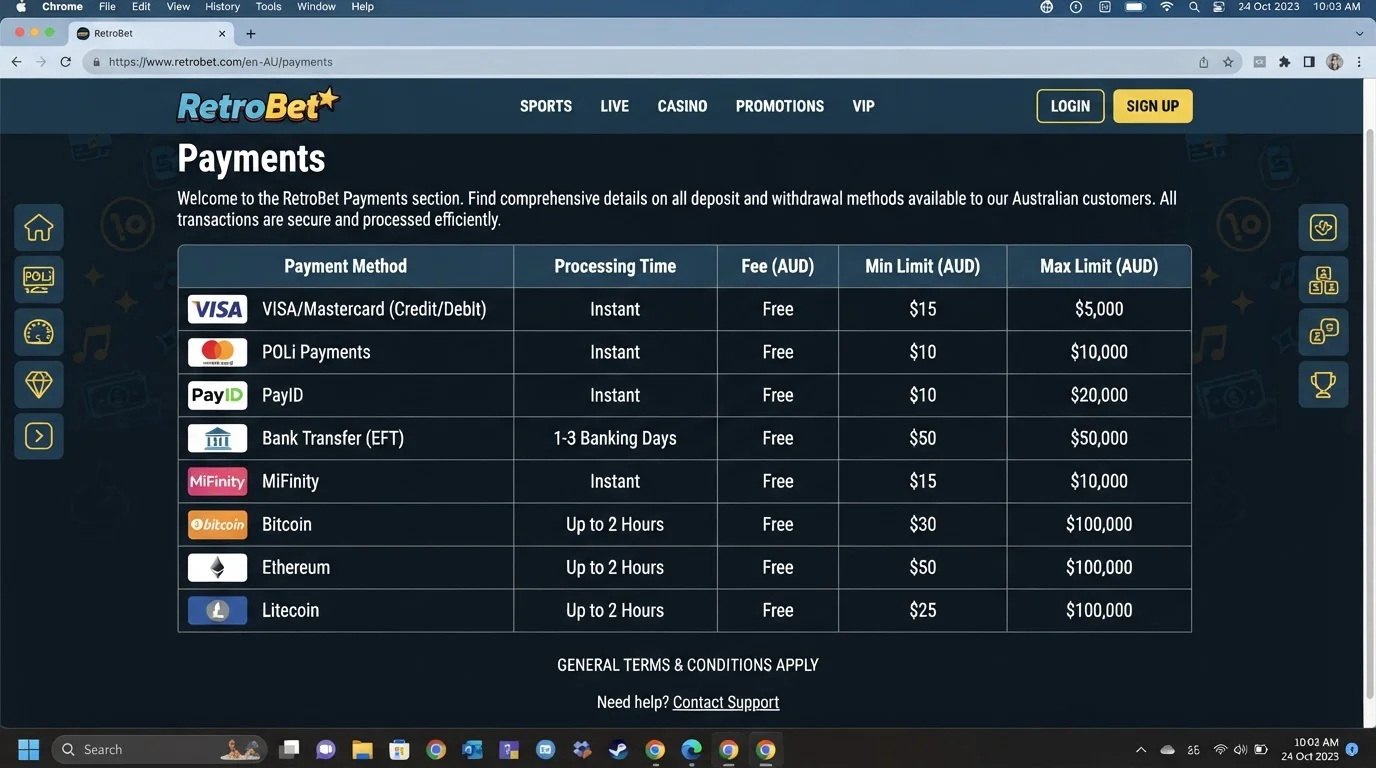
When a deposit is not shown, several explanations are possible. The operator may not yet have detected it, the amount sent may be below the required deposit amount, or an address may have been reused. These causes concern different parts of the process. Delayed detection concerns the operator’s recognition of a transfer; underpayment concerns the amount received; address reuse concerns how the deposit destination is handled.
A delay in the account display therefore does not, on its own, establish that the transfer was sent incorrectly. Conversely, a transfer being visible in a wallet does not establish that the operator has credited it to an account. The wallet and the casino balance are separate records maintained by different parties. The distinction matters when a payment appears complete on one side but not the other.
Address reuse can complicate the operator’s identification of an incoming payment. If a deposit destination has been used more than once, the operator may have difficulty associating a particular transfer with the intended account. The possibility is among the recognised causes of deposit non-recognition, but it does not show that every uncredited transfer involves reuse. The reason for a missing balance entry depends on the circumstances of that payment.
An underpayment is another possible cause. In that case, the amount received does not meet the operator’s deposit requirement, so the expected credit may not appear. This is distinct from delayed detection: waiting does not change the amount transferred. A balance that remains unchanged may therefore reflect either a processing issue or a mismatch in the payment, rather than a single standard failure.
Delayed detection refers to the operator not identifying or recording a payment promptly. Until that recognition occurs, the account balance may not reflect the transfer. This is an operator-side issue and should not be confused with the transfer itself. A visible balance is evidence of what the account currently displays, not a complete explanation of what happened to a payment.
Delayed Detection
The operator has not yet identified or recorded the transfer in the account balance.
Underpayment
The amount sent is below the operator's required minimum deposit amount.
Address Reuse
The use of a previous deposit address complicates the operator's ability to associate the transfer with an account.
These distinctions also clarify why phrases such as “no-deposit” do not describe a Bitcoin deposit problem. A deposit-recognition issue concerns a transfer that was sent but has not appeared in the account. It is different from an offer that does not require an initial deposit, and the latter does not establish that a subsequent Bitcoin payment will be credited or that winnings will be available.
In Australia, real-money online casino services are prohibited for operators serving people physically located in the country. This description of payment recognition is not an endorsement or offer of such services. Content on this page is affiliate material and may include sponsored links; that commercial relationship does not alter the legal position or provide protection against an offshore operator. Australian consumer protection laws do not apply to the offshore operators discussed.
Setting Up Bitcoin for Casino Payments
In Australia, a description of payment setup must be distinguished from an invitation to use an offshore casino. The Interactive Gambling Act 2001 prohibits operators from providing real-money online casino games to people in Australia.
Bitcoin can be acquired through a cryptocurrency exchange by exchanging fiat currency for it. Setting up an exchange account involves supplying basic information and creating a secure password. The account and password are part of access to the exchange; they are separate from the wallet used to hold and send Bitcoin. The details required to open an account may depend on the exchange.
A payment transfer, in general terms, begins with Bitcoin held in a wallet. The recipient supplies a wallet address, and the sender enters that address when arranging a transfer. In a casino-payment process, the casino would provide the destination address, while the player would initiate the transfer from their wallet. This description is not a recommendation to send funds to an offshore gambling operator.
Address accuracy matters. Bitcoin sent to an incorrect address is generally unrecoverable because blockchain transfers are irreversible. A transfer should not be treated as a routine bank payment that can simply be cancelled or recalled. The wallet address is the destination information for the transaction, so copying and checking it carefully is a basic part of the process.
Bitcoin is not cash held in a casino account, and acquiring it does not itself establish that a gambling service is authorised in Australia. The legal restriction concerns the operator’s provision of real-money casino games to people physically in Australia. Australian consumer protection laws also do not apply to the offshore operators discussed elsewhere in this article. Anyone considering gambling must be at least eighteen, but meeting that age condition does not alter the restriction on operators providing these services in Australia.
This page contains affiliate material and may include sponsored links. Such disclosure does not change the legal status of offshore casino services or constitute an endorsement.
When a Bitcoin Transfer Goes Wrong
A Bitcoin transfer sent to an incorrect address is generally unrecoverable. Blockchain transactions are irreversible: once a transaction has been confirmed, it cannot ordinarily be cancelled or redirected by a bank or payment provider. The recipient’s address determines where the funds go, so a mistaken entry can leave the sender without a practical route to recover them.
This risk is distinct from a payment that has gone to the intended address but has not appeared in an account. In the latter case, the issue may concern recognition by the operator; an incorrect destination is a problem with the transfer itself. These situations should not be treated as equivalent, because the possibility of an operator locating a delayed payment does not mean that a transfer to the wrong address can be reversed.
A different kind of difficulty can arise after a substantial win. Some operators may subject a new account or a first large withdrawal to a security review that delays access to the funds. A review may be presented as a check, but some operators may use such reviews as a stalling tactic. The possibility matters because a delay alone does not establish why a withdrawal is being held, and the available information may not make the operator’s reason clear.
A request to send additional money to release a stuck withdrawal should be treated as a warning sign. Depositing more does not reverse a blockchain transfer or establish that a pending withdrawal will be paid. Keeping transaction records and communications may help document what happened, but it cannot guarantee recovery of funds sent to an incorrect address.
These risks are relevant to anyone considering real-money gambling, but they do not change the Australian legal position: locally licensed online casinos cannot offer real-money pokies to people in Australia. Australian consumer protection laws also do not apply to the offshore operators discussed. Anyone aged under 18 must not play for real money; meeting the age requirement does not make an offshore service locally licensed or protected.
Bitcoin’s Payment Characteristics
Bitcoin’s security, privacy and cost are often presented as advantages over conventional payment methods. These are general characteristics, however, not guarantees about a particular transaction or service. They also do not establish that using Bitcoin to access real-money gambling is safe, lawful or protected.
Blockchain technology is cited as the basis for Bitcoin’s security: transactions are recorded and validated through the network rather than relying on a single payment intermediary. That structure can make unauthorised alteration difficult, but it does not remove every risk. Security of the network is distinct from security of a wallet, account or operator, and it should not be treated as proof that funds are risk-free.
Privacy claims require similar qualification. A specialist review describes Bitcoin as offering more anonymity than traditional payment methods. This is a relative claim, not a promise that a user’s identity or activity cannot be linked to transactions. The extent of privacy depends on the circumstances, and the comparison alone does not show that Bitcoin is anonymous.
Fees are also described as lower than those associated with credit cards and other conventional payment options. That assessment comes from a specialist review, rather than establishing a fixed cost across all transactions. The fee can vary, and the comparison does not account for every possible charge imposed by a service provider. Bitcoin network fees are separate from any charges an operator may apply.
These features should therefore be kept distinct from the practical steps involved in using Bitcoin. A security property of the blockchain does not verify the recipient, while a relative privacy advantage does not ensure confidentiality. A lower-fee assessment does not establish the total cost of a particular payment. Nor do any of these characteristics resolve the legal restrictions applying to real-money online gambling in Australia.
In short, the available descriptions support only bounded claims: blockchain technology underpins Bitcoin’s transaction security; some reviews characterise its privacy as greater than that of conventional payment methods; and some reviews report lower fees. None supports treating Bitcoin as anonymous, cost-free or entirely secure.
Bitcoin Withdrawals, Timing, and Common Delays
A Bitcoin withdrawal request generally begins in the account’s payment area. The requested amount is entered, and the wallet address that should receive the funds is copied into the casino’s withdrawal form. Accuracy matters: the address in the form determines where the transfer is sent.
The time taken to receive funds has two distinct parts. First, the operator may need to review and approve the request. After approval, the Bitcoin transaction must be processed on the network. A specialist review reports that most Bitcoin withdrawal transactions are completed within an hour, but that observation concerns transaction completion, not the full period from submitting a request to receiving funds. It is not a guaranteed payout time.
Operator-side handling can add delays before a transaction is sent. Requests may wait in an approval queue, remain pending while required customer checks are incomplete, or be processed in batches during business hours. These circumstances can make a withdrawal take longer even when the later network transfer is completed promptly. A pending request therefore does not, by itself, show that the Bitcoin network is responsible for the delay.
The account status and the transaction status should be considered separately. An operator may still be reviewing a request when no transaction has yet been broadcast; once a transaction is underway, its progress is a different matter. If a withdrawal is stuck, depositing additional money to unlock it is not a safe remedy. No further payment should be made on that basis.
Real-money gambling is restricted to adults aged 18 or over. Information about payment timing does not establish that a service is available, lawful, or suitable for Australian residents, nor does it guarantee that a withdrawal will be approved or paid by a particular time.
Verification Before a First Withdrawal
Additional identity checks may arise when an account first requests a withdrawal or when cumulative deposits reach an operator’s review threshold. The reported threshold varies by operator, from AUD 2,000 to AUD 5,000; it is not a universal rule. Such checks are separate from the processing of a withdrawal and can add a review stage before funds are released.
Crypto-related verification may also involve demonstrating control of the wallet used for a deposit. A specialist review describes possible requests to sign a message using the deposit address or provide a wallet screenshot that shows the sending transaction. These are examples of procedures that may be requested, not requirements established across all operators. The exact documents and steps depend on the operator.
A review of the account’s verification stages reports that completing identity and address checks, as well as any wallet-ownership check, before making a first withdrawal can reduce common payout delays. It recommends completing them soon after registration, ideally within 24 hours. This is a reported approach, not a guarantee that a withdrawal will be prompt or approved.
A request to deposit more money to release a stuck withdrawal should be treated with caution; depositing further funds does not establish that a pending payment will be released. Bitcoin sent to an incorrect address is generally unrecoverable because blockchain transfers are irreversible.
In Australia, real-money online casino services are prohibited for operators to provide, and Australian consumer protection laws do not apply to the offshore operators discussed. Real-money gambling is restricted to adults aged 18 or over. This page is affiliate material and may include sponsored links; that disclosure does not change the legal status of offshore services.
Prepared by the Retrobet Casino editorial staff.