
Check what Amex acceptance really means
Amex availability depends on the casino and issuer, and a general card label does not confirm that the network is supported.

Table of Contents
Table of Contents
- Where American Express Is Accepted—and Where It Is Not
- Making an American Express Deposit
- Card Acceptance, Security Checks and Differences Between Card Networks
- Card Payments Alongside Other Ways to Pay
- What “Top” Amex-Casino Claims Can—and Cannot—Establish
- Real-Money Gambling and the Australian Legal Context
- Amex Withdrawals: Eligibility, Fees and Processing Time
- Acceptance Depends on the Casino and Issuer
- When a Casino Deposit Does Not Use a Credit Card
- Currency Conversion and Other Costs of Using Amex
Where American Express Is Accepted—and Where It Is Not
American Express acceptance is not a uniform feature of Australian online casino cashiers. A specialist review reports that deposits using Amex are available at some Australian online casinos, while another specialist review says that some casinos do not accept it. These claims indicate that acceptance varies between operators; they do not establish how many casinos accept the card or whether a particular cashier still lists it.
The distinction matters because “a casino that accepts credit cards” can describe several different payment arrangements. A general card label does not confirm that Amex is included. Nor does evidence that one operator has offered Amex deposits establish acceptance at another. The available claims support only a limited conclusion: Amex has been reported as a deposit option at some Australian-facing online casinos, and its availability is not universal.
Acceptance should therefore be understood as an operator-specific feature, rather than a property of online casinos as a whole. A payment method may appear in descriptions of a site yet not be available in every account or at every point in time. Payment menus and terms can change, so a past or third-party description cannot, on its own, settle the current status of an individual cashier.
This also sets a boundary around what the available information can establish. It does not provide a complete directory of casinos that take Amex, a count of accepting operators, or a basis for ranking them. Naming a casino in connection with a payment method would not demonstrate that the method is currently available to every Australian customer. The evidence is too narrow to support a market-wide list or a recommendation.
The scope here is Amex acceptance, not credit-card acceptance in general. A casino may offer one card network and not another, and a broad reference to card payments does not identify which cards are supported. Likewise, the presence of an Amex option at one site should not be read as evidence that other card types are accepted there, or that the same terms apply across payment methods.

There is a further difference between a reported payment option and a completed transaction. A description of Amex acceptance concerns whether the method is presented as available; it does not guarantee that every attempted payment will be approved. The distinction is important when interpreting claims about an online casino that accepts credit cards: the phrase may be used broadly, while the actual cashier can be more specific about supported methods.
For Australian readers, the relevant question is consequently narrow: whether Amex is listed for deposits by the particular operator at the time of use. General statements about casinos accepting credit cards cannot answer that question. Even a report that an operator supports Amex should be treated as a claim about that operator and the period it describes, rather than as a standing rule for the wider market.
The evidence also does not justify describing Amex as either widely available or rare. Both labels imply a degree of coverage that the reported claims do not measure. The defensible account is less sweeping: some specialist reviews report Amex deposit availability at certain Australian online casinos, and a specialist review also reports that some casinos do not accept it. Neither statement supplies a reliable market share or establishes the current position of every operator.
Accordingly, “online casino with credit card” is not a sufficiently precise description when the card network matters. Acceptance of Amex must be distinguished from acceptance of cards in general, and claims about a specific cashier must be kept separate from conclusions about the market. The documented variation is enough to show that Amex cannot be assumed to work across all Australian online casinos, but not enough to identify a definitive set of sites where it does.
Making an American Express Deposit
A description of an Amex deposit concerns the payment sequence, not whether a particular casino accepts the card. In the reported process, the payment option is chosen in the cashier, card details and a deposit amount in Australian dollars are entered, and the transaction is submitted. This is a description of how the process has been reported, not an endorsement or a recommendation to use an offshore gambling service.
Amex Deposit Process
-
1
Select Method
Choose American Express as the payment option in the casino cashier.
-
2
Enter Details
Provide the card information and the deposit amount in Australian dollars.
-
3
Submit Request
Submit the transaction to send the payment request for processing.
The cashier is the point at which the payment is initiated. Choosing Amex identifies the intended payment method; entering the card information and amount supplies the details for the transaction. Submission then sends the payment request for processing. These are distinct stages: the appearance of a card option does not itself establish that the transaction will be approved, and submitting a request does not guarantee that funds will be credited.
A specialist review reports that Amex casino deposits are processed instantly. That timing should be read as a reported processing description, not a guarantee for every transaction. It refers to the deposit process and does not establish that every casino accepts Amex, that each payment request will succeed, or that account balances will be updated identically across services. The distinction matters because a stated processing speed describes what may happen after a payment is accepted; it does not resolve whether the card or website permits the payment in the first place.
A payment can also be declined. One specialist review identifies a particular cause: Amex may block payments to a specific website. In that situation, completing the cashier fields and submitting the request would not overcome the block. The decline would concern the attempted transaction, rather than the order in which card details and the amount were entered. The reported explanation is site-specific; it should not be converted into a claim that all Amex gambling transactions are blocked, or that all such transactions are approved.

A failed payment therefore does not, by itself, demonstrate that the card details were entered incorrectly. Nor does a cashier’s display of an Amex option settle whether a transaction can proceed. The payment sequence and the decision to approve a payment are separate matters. That distinction is especially important when a site’s payment information and the card issuer’s treatment of a transaction do not align.
The topic also sits within a legal context that limits what a payment description can imply. Under the Interactive Gambling Act 2001, operators may not provide real-money online casino games to people physically located in Australia. The Australian Communications and Media Authority enforces the Act. A description of a payment procedure should not be read as an invitation to deposit with an offshore casino or as evidence that such a service is lawful to provide to Australian residents. Australian consumer law does not protect players who use offshore casinos.
For the same reason, “instant” is not a useful substitute for assessing the status of a service or the outcome of a transaction. A reported processing time says nothing about the legality of an operator’s offer, and it does not establish that a payment channel is available to every Australian customer. The sequence—payment method, card details, amount, submission—describes the mechanics of a request, not a reliable route to completing one.
The distinction between payment initiation and approval also prevents a common misunderstanding: a cashier can present fields for a card payment without guaranteeing that the transaction will pass. A request may be declined, including where a website is blocked by Amex, while the reported instant timing applies only to deposits that are processed. These points do not establish a general rule for every casino or every card transaction.
Accordingly, the procedural account is narrow. It records how an Amex deposit has been described and the reported processing speed, while recognising that a site-specific block can prevent completion. It does not establish universal availability, successful approval, or a lawful basis for an offshore operator to provide real-money casino games in Australia.
Card Acceptance, Security Checks and Differences Between Card Networks
A card logo does not establish that a particular online casino will accept a transaction. American Express, Visa and Mastercard are separate payment networks, and an acceptance statement about one does not establish acceptance of the others. Nor does a general reference to credit cards show which network is supported. The distinctions matter when assessing claims about card acceptance, but they do not establish that a card payment will be available at every casino.
A specialist review has reported that Visa may be accepted at more Australian online casinos than Amex. That is a limited comparison, not evidence of a universal difference across operators. Acceptance can be described at a particular point in time, and a report about one set of sites does not settle how another set handles cards. It is therefore more precise to treat the comparison as a reported tendency than as a fixed feature of the Australian market.

Mastercard should not be assumed to occupy the same position as either network. A casino that accepts one card brand may not accept another, and an umbrella claim that a site takes credit cards can conceal those distinctions. Descriptions of card availability are most informative when they identify the network rather than treating all cards as interchangeable.
Acceptance and transaction limits are also separate questions. A specialist review has reported that Amex transaction limits tend to be higher than those associated with Visa and Mastercard. This does not mean that every Amex limit is higher, or that the same limit applies across casinos. It is a reported comparison, not a standard set by the card network for every gambling transaction. The practical limit is set at the casino level and can differ between operators, so a general statement about network limits cannot determine the terms at an individual site.
These comparisons should not be read as a ranking of cards. Broader acceptance does not by itself establish a more suitable payment method, and a higher reported limit does not establish that a transaction will be authorised. Acceptance, the amount permitted by a casino, and approval by the relevant financial institutions are distinct stages. A claim about one of them cannot be substituted for evidence about the others.
Account checks add a further distinction. Online casinos commonly require customers to undergo a Know Your Customer assessment before they can carry out financial transactions. This is an account-verification process, rather than a feature of Amex, Visa or Mastercard. It may therefore apply regardless of which card network is involved. Card acceptance alone does not establish that an account has completed the checks required for financial activity.
Visa
Reported to be accepted at more Australian online casinos than Amex.
American Express
Often associated with higher transaction limits than Visa and Mastercard.
Mastercard
Acceptance varies by operator and should not be assumed to be the same as other networks.
The network comparison and the verification requirement describe different parts of a transaction environment. Network acceptance concerns whether a card brand is supported; a casino’s limits concern the amount it permits; and a KYC assessment concerns the customer account. Treating these as one issue can make payment claims sound more definite than they are. For instance, a statement that a casino accepts a particular card does not establish a transaction limit or indicate whether verification has been completed.
Neither statement should be generalized into a guarantee about an individual casino. These are network-level claims with different scopes, not interchangeable measures of availability.
For assessing a credit card casino claim, the relevant details are therefore the named network, the casino’s own limits and whether the account has passed required checks. A generic label such as “credit card accepted” does not resolve those questions. The distinctions are particularly important in Australia, where payment descriptions should not be mistaken for evidence that a real-money online casino service is lawfully available.
Card Payments Alongside Other Ways to Pay
In Australia, paying by card is part of ordinary retail life, but that does not make card acceptance a reliable guide to payment options for any particular online service. Contactless purchases with credit or debit cards are supported across almost all of the country. Tap-to-pay is therefore a familiar way to settle everyday transactions, whether the underlying card is credit or debit.
Mobile wallets are similarly established in day-to-day payments. Google Pay and Apple Pay are available at almost all Australian payment points, allowing a compatible card to be used through a phone or other supported device. This broad presence describes general acceptance in Australia; it should not be read as evidence that a given online merchant, or a particular type of service, accepts either wallet.
Payment habits also extend beyond cards and wallet apps. Australians are accustomed to using services connected to bank accounts, including PayPal, as well as switching between those services and card-based payments. That familiarity means several payment formats may feel routine in everyday commerce. It does not, by itself, show which methods are available for an online transaction or how a payment will be handled.

This distinction matters when considering searches for a casino that does not use a credit card or for a site that appears to accept card deposits. The general ubiquity of contactless payments concerns the wider Australian payments environment, not the acceptance rules of an individual online service. A card that works at shops may not be usable for a particular online payment, and acceptance of a mobile wallet in everyday settings does not establish its availability for that purpose either.
The same care applies to bank-linked services. PayPal’s familiarity among Australian consumers is a fact about consumer payment habits; it is not confirmation that a casino offers PayPal, that a transaction will be approved, or that the service can be used for every payment function. Payment options are determined by the specific merchant and service arrangements, rather than by how common a method is elsewhere.
Card, wallet and bank-linked payments also perform different roles in a person’s broader financial routine. A physical or digital card can support direct purchases, a wallet can provide a device-based way to present a payment credential, and a bank-connected service can act as a separate intermediary. These categories may overlap in practice, but they are not interchangeable descriptions of a particular merchant’s checkout.
Accordingly, Australia’s widespread contactless infrastructure offers context for understanding familiar payment behaviour, not a shortcut for determining online acceptance. The presence of a contactless terminal or a wallet option in ordinary commerce cannot establish whether an online service accepts credit cards, debit cards, or digital wallets. Nor does general familiarity with bank-linked services settle whether those services are available for a given transaction.
The broader picture is one of choice across several payment formats in everyday life. That context can explain why card taps, mobile wallets and services such as PayPal are recognizable options to Australian consumers. It cannot establish that any one of them is supported by a particular online platform, or that an option used for one kind of payment will also be available for another. Each claim about an online payment method requires evidence specific to the service and transaction in question.
What “Top” Amex-Casino Claims Can—and Cannot—Establish
Top operators
When looking for casino sites that accept credit cards in Australia in 2026, check the available payment information and the terms that matter to you before choosing. This list offers a concise reference to the operators and the details available about them.
-
House of Pokies
- License
- international iGaming licence – jurisdiction not named in the source
- Payout speed
- PayID 1-24 hours
- Min. deposit
- A$30 (PayID from A$10)
House of Pokies lists PayID payouts of 1–24 hours and a minimum deposit of A$30, with PayID deposits from A$10. Its international iGaming licence is identified, but the jurisdiction is not named in the source.
-
Playfina Casino
- License
- Curacao eGaming (Hollycorn N.V., since 2017)
- Min. deposit
- A$20-30 (depends on the offer)
Playfina Casino operates under a Curacao eGaming licence held by Hollycorn N.V., noted as active since 2017. Its minimum deposit is A$20–30, depending on the offer.
-
DragonSlots Casino
- License
- Curacao Gaming Authority (Jumpman Gaming Ltd)
DragonSlots Casino is licensed by the Curacao Gaming Authority, with Jumpman Gaming Ltd named in connection with the licence.
-
WinSpirit Casino
- License
- Curacao eGaming OGL/2024/923/0383 (Antillephone N.V.)
- Min. deposit
- A$30
WinSpirit Casino lists a Curacao eGaming licence, OGL/2024/923/0383, issued to Antillephone N.V. Its minimum deposit is A$30.
-
Roby Casino
- License
- Curacao eGaming (Roby Games Ltd)
Roby Casino is associated with a Curacao eGaming licence held by Roby Games Ltd.
-
LevelUp Casino
- License
- Curacao eGaming OGL/2023/174/0082 (Dama N.V.)
- Min. deposit
- A$15
LevelUp Casino lists a Curacao eGaming licence, OGL/2023/174/0082, held by Dama N.V. Its minimum deposit is A$15.
-
LuckyVibe
- License
- Curacao Gaming Control Board OGL/2023/176/0095 (Hollycorn N.V.)
LuckyVibe lists a Curacao Gaming Control Board licence, OGL/2023/176/0095, associated with Hollycorn N.V.
-
Lucky Dreams
- License
- Curacao
- Min. deposit
- A$20 (POLi)
Lucky Dreams is listed as licensed in Curacao. Its stated minimum deposit is A$20 via POLi.
-
Thor Casino
- License
- Curacao – Antillephone N.V. (Versus Odds B.V.)
- Min. deposit
- EUR 20
Thor Casino is listed under a Curacao licence associated with Antillephone N.V. and Versus Odds B.V. Its minimum deposit is EUR 20.
-
Bizzo Casino
- License
- Curacao Gaming Control Board (TechSolutions Group N.V.)
Bizzo Casino is associated with a Curacao Gaming Control Board licence held by TechSolutions Group N.V.
A claim that a casino accepting Amex is “top” combines two different propositions: that the payment method is accepted, and that the operator ranks favourably against alternatives. Evidence for the first does not, by itself, establish the second. A payment-method label can describe a feature; a comparative ranking requires a defined basis for comparison.
A specialist affiliate review has named Jackpot City Casino, Spin Palace and Ruby Fortune among Australian online gambling sites said to accept Amex and described them as top options. That is evidence that such a claim has been published, not independent confirmation that the operators merit a shared ranking. The wording also does not show whether the named sites were assessed using consistent criteria or whether the comparison covered the broader field.
A substantiated ranking would need to make its method clear. Relevant questions include which operators were considered, what criteria determined their positions, and how the payment claim was checked. A ranking could, for instance, weigh payment availability alongside other defined measures, but the criteria and evidence would need to be stated. Without that information, “top” remains an evaluative label rather than a result that can be reproduced or tested.
The time at which a claim was checked also matters. Payment arrangements and site policies can change, so a description of acceptance is not necessarily a reliable account of present conditions. Even a carefully documented finding would apply only to the operator and circumstances examined; it would not establish a general feature of Australian online gambling sites.

The available claim therefore has a narrow evidential value: it records that a specialist affiliate review associated particular named operators with Amex acceptance and placed them in a favourable category. It does not establish that they are objectively superior, that the category is comprehensive, or that acceptance alone makes any operator a sound choice. Nor does the label resolve whether the claim was based on direct testing, published payment information, or another assessment method.
For that reason, “top credit card casino” language should be read as a ranking claim requiring its own supporting evidence, not as a neutral synonym for a site that accepts a particular card. Naming operators in that context does not supply the missing comparison. Where the basis, scope and date of assessment are unclear, the defensible conclusion is limited to the existence of the claim itself—not its validity as a ranking.
Real-Money Gambling and the Australian Legal Context
The legal position on real-money online casino gambling in Australia distinguishes between the conduct of operators and that of players. Under the Interactive Gambling Act 2001, providing online casino games to people located in Australia is illegal for operators. The restriction covers casino-style games such as poker, blackjack, roulette and pokies when offered for real money to Australian customers.
The Act does not explicitly make it a criminal offence for an individual to use an offshore casino. That distinction should not be mistaken for approval of the service or a guarantee that it is accessible. The law places the prohibition on the provider, while the player’s use of an offshore site is not explicitly criminalised under the Act. The Australian Communications and Media Authority (ACMA) oversees enforcement of the legislation, including action against prohibited services.

The location of the operator does not change the basic distinction: an offshore business offering real-money casino games to people in Australia is still providing a service prohibited by Australian law. Nor does the fact that a site accepts a particular payment method establish that its service is lawful in Australia. Payment availability and legal status are separate matters.
There is also a consumer-protection consequence. Australian consumer law does not protect players who use offshore casinos. If a dispute arises over an account, a payment or a site’s handling of funds, a player cannot rely on Australian consumer protections in the same way as when dealing with a business covered by those laws. This leaves a significant difference between the appearance of a familiar online service and the protections available under Australian law.
The distinction matters when considering real-money casino play funded by credit card. A card transaction does not change the legal status of the underlying gambling service, and the presence of a payment option should not be treated as evidence that an operator may lawfully offer casino games to Australians. The relevant prohibition concerns the operator’s provision of the service, while the absence of explicit criminalisation for players does not create consumer protection for offshore play.
These points describe the legal framework, not the terms of any individual site. A particular operator’s claims about its location, payment methods or access do not override the Australian prohibition on providing online casino games to people in the country. Nor does the difference in legal treatment between operators and players mean that offshore gambling is covered by Australian consumer law.
Amex Withdrawals: Eligibility, Fees and Processing Time
An Amex cash-out is not simply the reverse of making a card deposit. A reported condition is that the account must have been funded with Amex before winnings can be sent back to that card. This prior-deposit requirement may determine whether the card is eligible for a payout at all; it does not establish that every casino supports withdrawals to Amex.
A specialist review reports that some Australian online casinos do not offer Amex as a withdrawal method. The distinction between accepting a card for deposits and allowing payouts to it matters: a payment method shown for funding an account may not be available for receiving money. Withdrawal options therefore depend on the individual casino’s rules, rather than on the card network alone.
Fees and eligibility
A further restriction reported in specialist coverage is the possibility of an additional fee when winnings are withdrawn to Amex. The fee, where applied, is associated with the casino’s withdrawal conditions. It should not be treated as a charge that applies to every Amex payout, nor as evidence that a withdrawal will be permitted. The method’s eligibility and any fee are separate matters: a casino may decline to pay to Amex, or may allow it subject to a charge.
Amex gift cards do not provide a withdrawal route. Their stated use at casinos that accept Amex is limited to deposits, so they should not be confused with a credit card capable of receiving winnings.

Clearance time
A specialist review gives a clearance period of up to five days for Amex casino withdrawals. This is a reported timeframe for withdrawals, not a promise that every payout will be completed within that period. It also refers to the time for a withdrawal to clear, rather than the processing speed of a deposit.
For a payout by card to be possible, the relevant conditions must align: the casino must allow Amex withdrawals, the player must have made the required earlier deposit with Amex, and any applicable withdrawal fee must be accounted for. The reported clearance period describes what may follow once a withdrawal is available; it does not override those eligibility conditions. A casino’s own payment terms determine whether Amex can be used for cashing out and what charges apply.
Acceptance Depends on the Casino and Issuer
Credit-card acceptance is not determined by the card network alone. An online casino may list Amex as an available payment method, yet the transaction can still depend on the rules applied by the casino and the bank that issued the card. These are separate decision points, so an acceptance claim does not establish that every Amex card will work at every site.
A specialist review reports that casinos set their own Amex deposit and withdrawal limits, with the permitted amounts differing between operators. Those figures should therefore be treated as site-specific terms rather than a shared standard for casinos accepting credit cards. A limit published for one operator does not establish the limit at another, and the terms may need to be checked directly with the relevant operator.
Issuer decisions create a further constraint. Australian banks may block gambling-related transactions made with Amex, even when a casino indicates that it accepts the card. In that situation, the restriction is applied at the bank level rather than being evidence that the casino has removed Amex as a payment option. Conversely, a casino’s stated acceptance does not require an issuing bank to approve a particular charge.
This distinction matters when interpreting lists of online casinos accepting credit cards. A payment-method label describes the operator’s stated support; it cannot confirm the outcome of an individual transaction or override issuer controls. The relevant casino terms determine its own limits, while the card issuer can independently prevent a gambling-related payment. Both conditions shape whether Amex acceptance is available in practice.
When a Casino Deposit Does Not Use a Credit Card
A deposit at an online casino need not involve a credit card. Cryptocurrency and bank transfer are two alternatives, but their reported timing and costs differ.
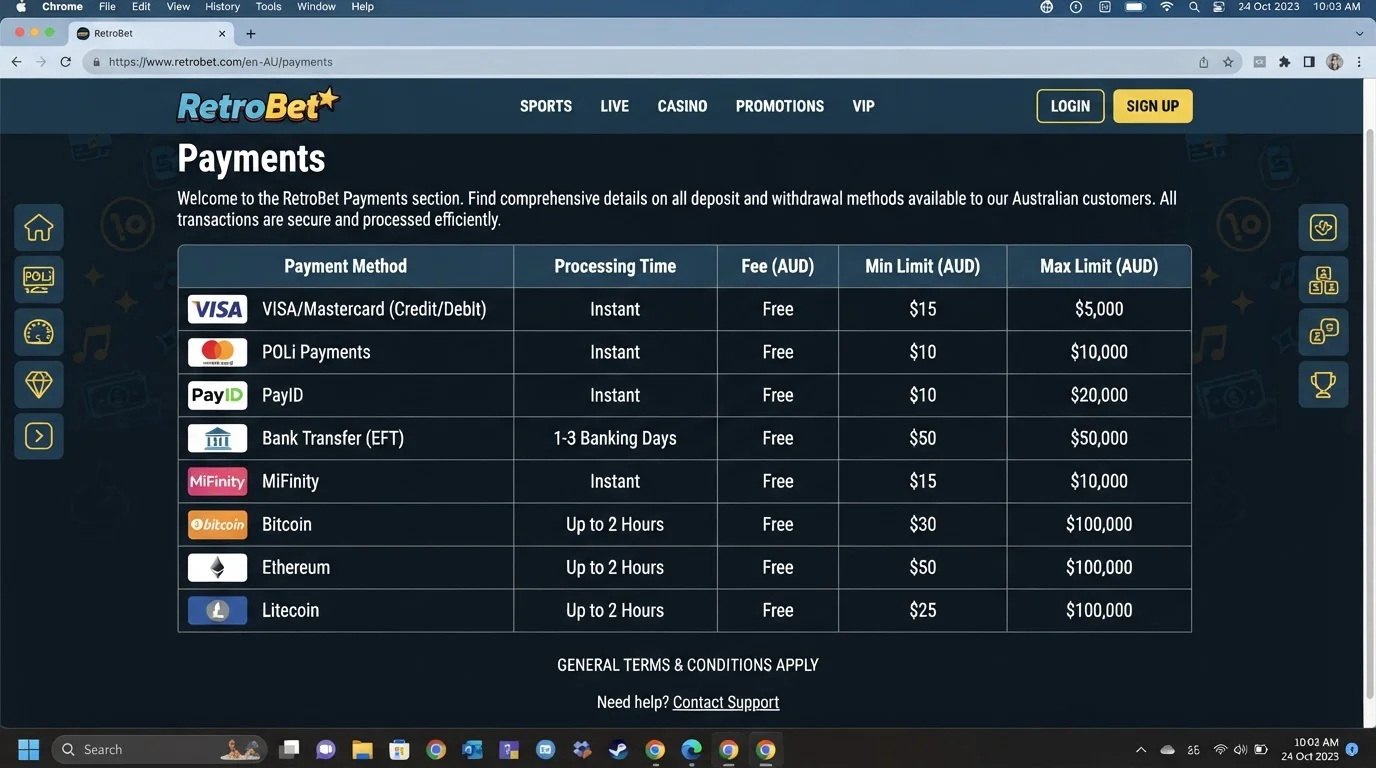
Bitcoin and Ethereum are identified as options for both deposits and withdrawals. Transactions using these cryptocurrencies are described as instant, with limited or no fees. That description concerns the payment method; it does not establish that either currency is available at every casino or that transaction conditions are identical across services.
Bank transfers can take longer and cost more. A specialist review reports these as possible drawbacks, rather than fixed conditions applying to every transfer. The processing time and charges depend on the service involved, so a bank transfer cannot be assumed to match the speed or fee profile reported for cryptocurrency.
The distinction is practical: cryptocurrency may allow funds to move quickly with few or no fees, while bank transfers may involve delays and additional costs. Neither method is a credit-card payment, and their availability and terms are not interchangeable. In particular, the general description of cryptocurrency transactions does not guarantee that a casino will support a specific currency for both directions of payment. Likewise, the reported potential for longer waits and higher charges does not specify a universal bank-transfer timetable or fee.
These alternatives describe payment mechanisms, not the legal status of online casino services in Australia. The payment method alone does not determine whether a service is lawful or available.
Currency Conversion and Other Costs of Using Amex
The cost of an Amex transaction can involve separate charges rather than a single fee. A specialist payment review describes Amex gambling transactions as free of a standard transaction fee, but that does not rule out charges imposed by a casino or costs arising when a payment is converted between currencies.
One specialist review reports that a casino may add a 1.5% surcharge to Amex transfers. This is an operator-level charge, not a general Amex fee, and should not be treated as a uniform condition. A separate specialist review cites a 3% currency-conversion fee for Amex. That figure concerns conversion, not the basic act of making a card transaction, and the report does not establish that it applies to every card or casino.
These distinctions matter when a payment is described as having no fee. That wording may refer only to the nominal transaction charge; it does not necessarily include a casino surcharge or currency conversion. The applicable cost depends on the transaction and the terms attached to it. Where a payment is processed in a currency other than Australian dollars, conversion costs may be relevant, while a surcharge may be listed separately by the casino.
The reported percentages are specific claims in specialist reviews, not evidence of standard pricing across the market. They should therefore be read as possible cost components, not combined into a guaranteed total or assumed to apply to every Amex transaction.
How do you check if casino sites accept Amex deposits?
Check whether American Express is listed as a deposit option in that casino’s cashier. Card acceptance varies by operator, and a general mention of credit cards does not confirm Amex is supported.
What are the deposit and withdrawal limits at the best Amex casinos?
Amex deposit and withdrawal limits are set by each casino and can vary. Amex limits are usually higher than the limits for Mastercard and Visa.
Are there any limits on how much I can deposit or withdraw using American Express?
Yes. Each casino sets its own Amex deposit and withdrawal limits, so the amounts vary by operator.
Can I use Amex to withdraw winnings from an Australian online casino?
Some casinos allow Amex withdrawals, but not all do, and you may need to have deposited with Amex first. A casino may also charge a withdrawal fee.
Are casino Amex payments instant?
Amex casino deposits are reported as instant, though a payment can still be declined, for example if Amex blocks transactions to that website. Withdrawals can take up to five days to clear.
Are there any fees for depositing with American Express?
Amex deposits typically have no fees, but a casino may add a 1.5% surcharge, and Amex cards incur a 3% currency conversion fee.
Prepared by the Retrobet Casino editorial staff.