
How to Assess Trustly Claims for Australian Pokies
The guide separates claims about Australian cashier access from broader casino mentions, and treats deposits, withdrawals and games as distinct questions.

Table of Contents
Table of Contents
- Trustly and Australian Online Pokies: What the Available Evidence Establishes
- Deposit Questions: Minimums, Fees and Payment Evidence
- Withdrawal Timing: What Is Known About Other Payment Methods
- The Australian Legal Context for Offshore Casino Searches
- Comparing Payment Options Without a Trustly Ranking
- Casino Games and Payment Methods Are Separate Questions
- Australian Payment Habits and the Limits of Local Acceptance Data
- Withdrawal Routes and Processing Times: American Express as a Limited Comparison
- Paying with Trustly: What Cannot Be Confirmed
- Online Slots and Trustly: No Verified Connection
Trustly and Australian Online Pokies: What the Available Evidence Establishes
Interest in Trustly as a way to fund Australian online pokies does not, by itself, establish that any particular site accepts it. A payment method’s name may appear alongside casino-related material without demonstrating that the method is available to Australian customers, or that a transaction can be completed. Those are separate claims and require evidence about the specific service and its current payment arrangements.
For a site to be described accurately as accepting Trustly, there would need to be a reliable basis for saying that Trustly is offered in its cashier to customers in Australia. A general mention of the payment brand would not settle whether it can be used for this purpose, in this location, or at the time of a transaction. Nor would a statement about a casino’s payment options in another country establish its availability to Australians. Payment access can depend on the operator, the customer’s location and the terms applying at the point of use.
The distinction matters because broad descriptions can collapse several different propositions into one. A site might refer to Trustly in general information, while its cashier does not offer it to a particular customer group. A payment option might be associated with a casino in one market but not another. Even a claim that an operator supports a method would not establish that the method is available for every account or transaction. Without evidence specific to Australian access, a site should not be characterised as an Australian Trustly pokies site.
Top operators
If you’re looking for casino sites that accept Trustly in Australia in 2026, check each site’s current cashier options before depositing: the information available here does not confirm Trustly availability. The details below provide a brief reference to the known licensing and deposit information for each operator.
-
House of Pokies
- License
- international iGaming licence – jurisdiction not named in the source
- Payout speed
- PayID 1-24 hours
- Min. deposit
- A$30 (PayID from A$10)
House of Pokies lists PayID payouts in 1–24 hours and a minimum deposit of A$30, with PayID deposits from A$10. Its international iGaming licence is noted, but the jurisdiction is not named.
-
Playfina Casino
- License
- Curacao eGaming (Hollycorn N.V., since 2017)
- Min. deposit
- A$20-30 (depends on the offer)
Playfina Casino is listed under Curacao eGaming, with Hollycorn N.V. associated with the licence since 2017. Its minimum deposit is A$20–30, depending on the offer.
-
DragonSlots Casino
- License
- Curacao Gaming Authority (Jumpman Gaming Ltd)
DragonSlots Casino is listed under the Curacao Gaming Authority, with Jumpman Gaming Ltd named in connection with its licence.
-
WinSpirit Casino
- License
- Curacao eGaming OGL/2024/923/0383 (Antillephone N.V.)
- Min. deposit
- A$30
WinSpirit Casino is listed under Curacao eGaming licence OGL/2024/923/0383, associated with Antillephone N.V. Its minimum deposit is A$30.
-
Roby Casino
- License
- Curacao eGaming (Roby Games Ltd)
Roby Casino is listed under Curacao eGaming, with Roby Games Ltd named in connection with its licence.
-
LevelUp Casino
- License
- Curacao eGaming OGL/2023/174/0082 (Dama N.V.)
- Min. deposit
- A$15
LevelUp Casino is listed under Curacao eGaming licence OGL/2023/174/0082, associated with Dama N.V. Its minimum deposit is A$15.
-
LuckyVibe
- License
- Curacao Gaming Control Board OGL/2023/176/0095 (Hollycorn N.V.)
LuckyVibe is listed under Curacao Gaming Control Board licence OGL/2023/176/0095, associated with Hollycorn N.V.
-
Lucky Dreams
- License
- Curacao
- Min. deposit
- A$20 (POLi)
Lucky Dreams is listed as operating under a Curacao licence. Its stated minimum deposit is A$20 when using POLi.
-
Thor Casino
- License
- Curacao – Antillephone N.V. (Versus Odds B.V.)
- Min. deposit
- EUR 20
Thor Casino is listed under a Curacao licence associated with Antillephone N.V. and Versus Odds B.V. Its minimum deposit is EUR 20.
-
Bizzo Casino
- License
- Curacao Gaming Control Board (TechSolutions Group N.V.)
Bizzo Casino is listed under the Curacao Gaming Control Board, with TechSolutions Group N.V. named in connection with its licence.
The same standard applies to labels such as “best” or “new.” Those descriptions imply a basis for comparison: confirmed availability, a defined set of eligible sites, and criteria by which one option could be judged against another. A list of names would not meet that standard if Trustly acceptance for Australian customers had not been established. Adding a recommendation or ranking would make the claim stronger, not more reliable. In this context, no operator can responsibly be singled out as a leading or newly available Trustly option.
The mobile setting does not resolve the question. A website or cashier being accessible on a phone would not show that Trustly is among the payment methods offered to Australian customers. Mobile access, the presence of a payment brand on a page, and the ability to complete a transaction are distinct matters. Evidence for one cannot be treated as evidence for the others.
It is also important to separate general payment information from Trustly-specific terms. Conditions described for another method cannot be transferred to Trustly. Details about another payment brand’s deposit process, fees, limits or processing time say nothing about the availability or conditions of Trustly. Those details cannot support a claim that Trustly is accepted, nor can they establish what a Trustly transaction would involve.

The legal setting is material to how such claims should be read. The Interactive Gambling Act 2001 prohibits operators from providing real-money online casino games to people in Australia. Australian consumer law does not protect players who use offshore casinos. A payment-method description therefore should not be read as an endorsement, a guarantee of access, or an indication that an offshore casino service is lawful or protected for Australian customers.
A careful account of Trustly and Australian online pokies must keep the claim narrow. Search terms and promotional labels can signal what people are trying to find, but they do not verify an operator’s cashier or the availability of a method in Australia. The distinction is between interest in a payment option and a substantiated statement about where it can actually be used.
Deposit Questions: Minimums, Fees and Payment Evidence
A deposit minimum is an operator-set condition, not an inherent feature of a payment brand. The amount displayed for one payment route may therefore say nothing about the amount required through another. For Trustly, no dependable minimum deposit can be stated for Australian-facing casino sites, and no particular deposit threshold can be treated as confirmed. A low-deposit claim attached to Trustly should not be assumed to apply without clear, current terms from the operator and a functioning Trustly option in its cashier.
The same distinction applies to fees. A payment method’s general characteristics do not establish what a casino will charge, whether a transaction will be accepted, or whether the payment route is available to a customer in Australia. Trustly-specific deposit fees and conditions cannot be stated reliably. A figure advertised for another method, or a fee policy described for a different operator, would not establish Trustly’s terms.
Searches for a casino deposit made through Trustly can also conflate separate questions: whether an operator offers the method, what minimum it sets, whether it charges a deposit fee, and whether the customer’s transaction can proceed. Each requires its own evidence. A name appearing in a payment list would not, by itself, establish the terms that apply to the cashier at the time of a transaction. Nor would an advertised minimum prove that Trustly is available for Australian customers.
American Express provides a limited comparison, but not a proxy for Trustly. A specialist review has reported that Amex deposits may carry no fee, while also noting that charges depend on the individual casino and that withdrawals may incur fees. This is a report about Amex, not a general rule for casino payments. It does not establish that a particular operator currently accepts Amex, and it provides no basis for inferring Trustly’s charges.

The same specialist-review material describes Amex deposit and withdrawal limits as varying between casinos. That variability illustrates why payment terms should be read as operator-specific rather than as fixed properties of a payment method. It does not establish any Trustly limit. A casino’s published payment conditions may also distinguish between depositing and withdrawing, so a statement about one transaction direction should not be extended to the other.
For a sound comparison, the relevant terms would need to identify the payment method, the customer’s location, the transaction type and the operator’s current conditions. A deposit page that lists multiple methods may not show that every method is enabled for every account. Terms can also distinguish minimum deposits from maximum transaction limits and from fees imposed by a payment provider or card issuer. Without method-specific, current terms, these distinctions cannot be resolved by applying an Amex policy to Trustly.
The phrase “best” does not solve that evidence problem. A ranking based on deposit minimums or fees would require comparable, current conditions across operators and confirmation that the named method is genuinely available to Australian customers. In the absence of that information, there is no defensible Trustly-based ranking or recommendation. An apparently low threshold, even if shown in an operator’s general cashier information, would not establish a Trustly deposit minimum unless the terms explicitly connect that amount to Trustly.
There is also a separate legal and consumer-protection issue. Australian law prohibits operators from providing real-money online casino games to people in Australia, and the Australian Communications and Media Authority enforces that framework. Australian consumer law does not protect players who use offshore casinos. This matters when considering payment claims: a displayed deposit condition should not be mistaken for evidence that an offshore casino is authorised to serve Australian residents or that a player has the protections available in a lawful local market.
Accordingly, a Trustly deposit amount or fee should not be inferred from a search result, a general payment description or information about another method. The available Amex comparison shows that casino terms can vary by operator; it cannot fill the gap for Trustly. Without a confirmed Trustly cashier option and explicit, current terms for the relevant customer and transaction, no minimum or fee can responsibly be assigned to a Trustly casino deposit.
Withdrawal Timing: What Is Known About Other Payment Methods
The same limitation applies to claims about instant payouts at Australian pokies sites: a payment method’s name, by itself, does not establish that a particular cashier supports it or indicate when funds will arrive. Deposit speed is also not a substitute for withdrawal timing. A payment may be credited quickly when money is added to an account, while a later payout follows a different route.

The clearest time-based comparison concerns Amex. A specialist review reports that casino withdrawals to Amex can take up to five days to clear. This is a reported timeframe for that payment method, not a Trustly estimate or a guarantee for every casino. It also does not establish how long an operator takes to review a withdrawal request before sending funds. The distinction matters: a published clearance period cannot, on its own, describe every stage between requesting a payout and receiving it.
The Amex comparison should therefore be read narrowly. It gives a bounded indication of a reported withdrawal period, but does not show that Amex and Trustly use the same processing arrangements. Nor does it support a general ranking of either method as faster. Payment availability, casino procedures and the route used to deliver funds can differ, so one method’s reported timing cannot be transferred to another.
Cryptocurrency is described differently in general payment comparisons. Bitcoin and Ethereum are presented as allowing instant deposits and withdrawals, with limited or no fees. That description is not a Trustly comparison, and it should not be treated as a promise that every cryptocurrency payout will be immediate in every setting. It establishes only the stated general character of those methods; it does not supply a Trustly timetable or a casino-specific processing commitment.
Bank transfers provide another limited point of contrast. A specialist review notes that they may involve longer waits and higher fees. The wording is conditional, not a fixed service standard: it does not specify a duration, a fee amount or how a given transfer compares with Trustly. It is consequently not a basis for calculating when a payout would arrive or for describing every bank transfer as slow.
American Express
A specialist review reports that withdrawals can take up to five days to clear.
Cryptocurrency
Bitcoin and Ethereum are generally presented as allowing instant deposits and withdrawals with limited or no fees.
Bank Transfers
These may involve longer waits and higher fees compared to other methods.
These comparisons also show why the word “instant” requires care. A label may refer to the time for a payment instruction to be accepted, to the operator’s handling of a request, or to the point funds become usable in an account. Those are not necessarily the same event. A claim about one stage cannot establish the timing of the others, and a deposit description cannot establish a withdrawal schedule. Without a method-specific and operator-specific timetable, a precise promise would overstate what can be concluded.
For an Australian player considering a real-money casino payout, the practical distinction is between a method’s general description and the terms attached to a particular transaction. A reported Amex clearing period, a broad statement about cryptocurrency, and a conditional comparison for bank transfers each describe different payment routes. None supplies a Trustly withdrawal window. In particular, “instant” should not be read as a verified arrival time for Trustly or as evidence that a cashier offers that method.
The available comparisons are therefore useful only within their limits: Amex has a reported clearance period of up to five days in a specialist review; cryptocurrency is characterised generally as supporting instant deposits and withdrawals with limited or no fees; and bank transfers are described as potentially slower and more costly. These statements do not establish a shared standard across payment methods. They provide no sound basis for promising instant Trustly withdrawals, estimating a Trustly payout date, or treating the timing of another route as a substitute.

The Australian Legal Context for Offshore Casino Searches
A payment method does not alter the legal status of an online casino service. In Australia, the Interactive Gambling Act 2001 makes it unlawful for operators to provide real-money online casino games to people located in the country. This applies to casino-style services such as poker, table games and pokies, regardless of whether a site presents itself as offshore or accepts a particular payment method. Trustly acceptance, if stated by an operator, would not make the underlying service lawful in Australia.
The Act is directed at providers rather than explicitly making it a criminal offence for an individual to use an offshore casino. That distinction should not be mistaken for legal approval, a local entitlement to gamble, or a guarantee that a service will remain available. The law prohibits the provision of these services to people in Australia, and offshore branding does not remove that restriction.
Enforcement sits with the Australian Communications and Media Authority (ACMA), the regulator charged with administering the Act’s restrictions. The law provides for substantial daily penalties for breaches: the maximum is $360,000 for an individual and $1.8 million for a body corporate. These penalties concern those who violate the Act; they do not establish a penalty for a player merely using an offshore site.
This framework matters when considering descriptions of casino sites that accept Trustly in Australia. Such descriptions may concern a payment facility or an operator’s own claims, but neither proves that the operator may lawfully offer casino games to Australian residents. Nor does a payment brand’s availability establish that a casino is locally regulated. A payment method and the legality of the gambling service are separate matters.
Offshore operators are not covered by Australian consumer law in the way domestic businesses are. Consequently, a person using an offshore casino cannot rely on Australian consumer protections to resolve a dispute with that operator. The practical consequence is that complaints about account access, payments or winnings may not have the protections or remedies available in a domestic consumer transaction. This does not establish how any particular dispute would be resolved; it identifies the limits of Australian consumer law for offshore use.
The regulator’s enforcement role also means that offshore casino services should not be treated as ordinary local entertainment businesses. The legal position is not determined by the wording of a site’s payment page, its marketing description or the presence of a familiar bank-linked service. Whether an operator accepts Trustly is therefore not a substitute for assessing the legal context, and it should not be read as evidence of an authorised Australian casino offering.
For searches concerning Trustly and offshore casinos, the central distinction is between a payment claim and the law governing the service. The Interactive Gambling Act restricts operators from supplying real-money online casino games to people in Australia, while not explicitly criminalising players who use offshore sites. At the same time, Australian consumer law does not protect players in those offshore transactions. These points define the legal context without endorsing or recommending any operator.

Comparing Payment Options Without a Trustly Ranking
A ranking of Trustly casinos would require comparable, current evidence about which operators accept the method and the conditions attached to it. Without that basis, naming a “best” site or presenting a list would imply a level of verification that is not available. The same limitation applies to claims about Trustly-related bonuses: no reliable comparison can be made from a payment method’s name alone.
There is one narrow point of comparison involving other payment options. A specialist review reported that Visa may be accepted at more Australian-facing online casino sites than American Express. That is a qualified observation from a single type of publication, not a stable measure of market-wide acceptance. Payment arrangements can differ between operators and can change, so the comparison should not be read as a current guarantee that a particular card will work at any given cashier.
Nor does broader reported acceptance make Visa a substitute for Trustly. The methods are distinct, and evidence about one cannot establish whether another is supported, how it would be used, or what terms would apply. A comparison based on payment labels alone would therefore leave out the information needed to assess compatibility. It would also fail to establish whether advertised bonuses, if any, are available through a particular method or subject to separate conditions.
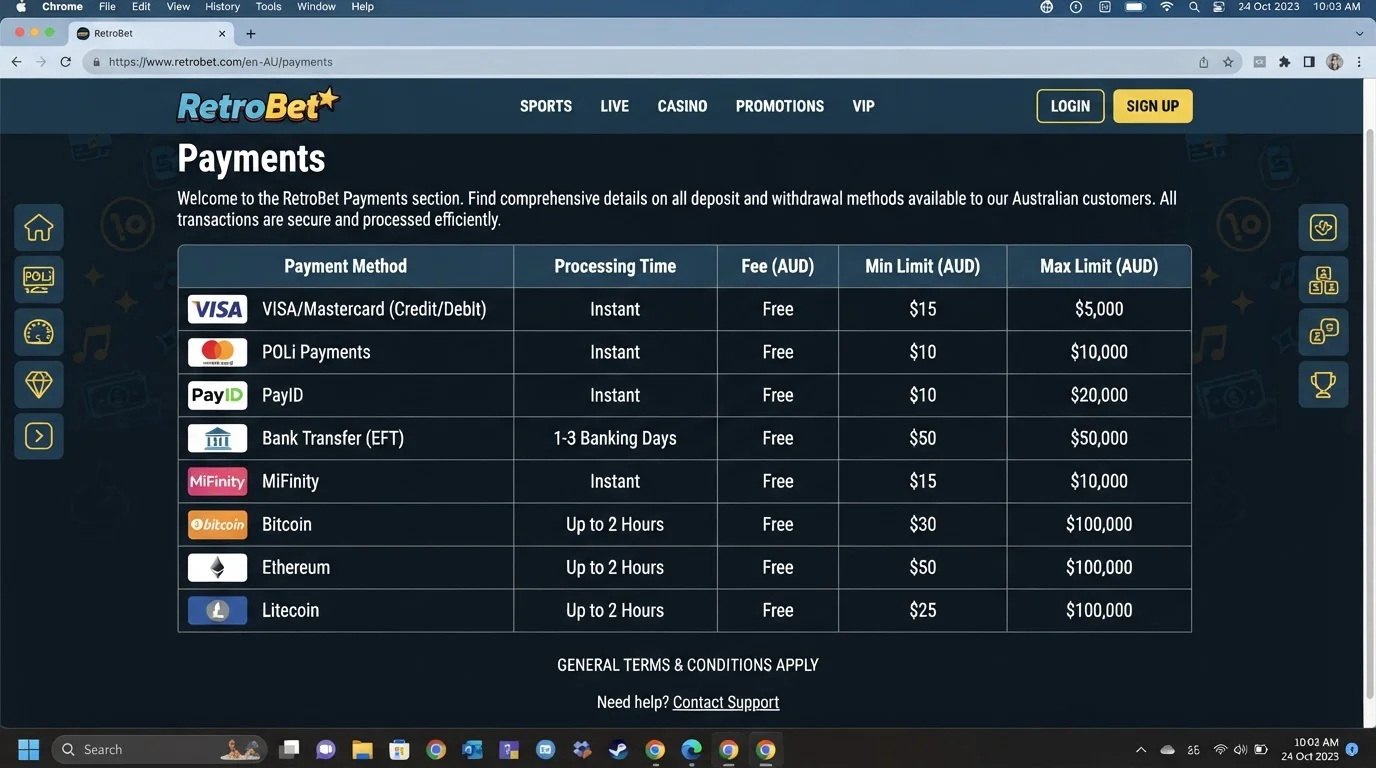
The Australian legal setting further limits the practical meaning of casino rankings. Under the Interactive Gambling Act 2001, operators may not provide real-money online casino games to people located in Australia. The Australian Communications and Media Authority enforces that law. A list framed as a recommendation of casino sites would risk presenting prohibited services as options, rather than describing the limits of the available payment evidence. Australian consumer law does not protect players who use offshore casinos.
Accordingly, the evidence supports only a restrained conclusion: one specialist review has suggested wider Visa acceptance than Amex, while that comparison does not establish Trustly availability or justify a ranking of Trustly casino websites. It cannot substantiate a “best” choice, a list of suitable sites, or a recommendation based on bonuses. The distinction is important: a reported comparison between two card brands is not a general endorsement of online casinos, nor evidence that any particular payment route is available to Australian residents.
Casino Games and Payment Methods Are Separate Questions
A casino’s game catalogue and its payment methods describe different parts of its operation. Games concern what an operator makes available; a payment method concerns how money might be moved into or out of an account. A reference to Trustly in a payment context therefore does not, by itself, establish that any particular game can be played using that service.
The distinction matters when interpreting claims about Trustly casino games or slot games. A payment provider is not a game title, and a game’s availability does not show which payment options an operator’s cashier supports. It would therefore be misleading to infer game availability or payment compatibility from the wording of a casino listing alone.
Account checks are another separate matter. Online casinos commonly require customers to undergo a Know Your Customer assessment before they can carry out financial transactions. This assessment is a condition attached to account and transaction access; it does not indicate which games are offered or which payment methods are accepted. Completing identity checks would not, in itself, establish that Trustly is available or that a particular game is connected to it.
These distinctions are especially important in Australia. The Interactive Gambling Act 2001 prohibits operators from providing real-money online casino games to people located in the country. The Australian Communications and Media Authority is responsible for enforcing the Act. Although players are not criminally liable merely for using an offshore casino, Australian consumer law does not protect people who use offshore casinos. That legal context does not turn an unverified payment claim into evidence of an available service.
Accordingly, “casino games with Trustly” combines two questions that require separate evidence: whether a game is offered and whether Trustly is available as a payment option. Neither can be inferred from the other. The fact that casinos may require identity assessment before financial activity adds an account-access condition, not proof of a game or payment arrangement. Claims about a Trustly-linked game catalogue or a Trustly casino payment option cannot be substantiated on this basis.
Do
- Distinguish between game availability and payment method support
- Verify identity via KYC assessments before financial transactions
Don't
- Infer game availability from the presence of a payment logo
- Assume a payment provider is connected to a specific slot title
Australian Payment Habits and the Limits of Local Acceptance Data
Contactless credit and debit cards are accepted across almost all of Australia, while mobile wallets such as Google Pay and Apple Pay are similarly widespread. Consumers are also accustomed to moving between cards, mobile wallets and bank-linked services such as PayPal. These patterns describe everyday payment behaviour; they do not establish which services a particular online merchant supports.
That distinction matters when assessing claims about an Australian casino using Trustly. Familiarity with bank-linked payments does not show that Trustly is available in a particular cashier, or that a transaction would be permitted. A payment service’s general presence in a country and its acceptance by an individual merchant are separate questions. The same is true of cards and mobile wallets: broad use across Australia should not be read as evidence that they can fund online gambling accounts.
Trustly is therefore not interchangeable with every service connected to a bank. Payment methods have distinct arrangements, and a general description of Australian habits cannot confirm a Trustly option at an online casino. The term “Australian Trustly casino” may suggest a local payment pattern, but it does not itself establish local availability or a locally authorised service.
The legal setting is also material. Under the Interactive Gambling Act 2001, operators must not provide real-money online casino games to people in Australia. The Australian Communications and Media Authority enforces that law. The prohibition concerns providers; it does not explicitly make a player’s use of an offshore site a criminal offence. However, Australian consumer law does not protect players using offshore casinos, an important limit when considering any payment arrangement.
Consequently, Australia’s widespread use of contactless cards, mobile wallets and bank-linked services provides context about consumer habits, not evidence of Trustly acceptance for casino transactions. It cannot establish that a specific casino offers Trustly, nor override the legal distinction between ordinary payment practices and prohibited online casino services.
Withdrawal Routes and Processing Times: American Express as a Limited Comparison
Withdrawal availability and withdrawal speed are separate questions. A payment method may be accepted for deposits without being available for returning winnings, and a stated clearing time does not establish that every casino supports that route. This distinction matters when assessing claims about casino withdrawals through Trustly: a method’s presence in a cashier would not, by itself, establish its withdrawal availability or processing time.
For Amex, a specialist review reports that casino withdrawals may not be permitted to the card at all. The same type of review gives a possible clearing period of up to five days where an Amex withdrawal is supported. These are reported conditions, not a universal rule for Australian online casinos; availability and timing can vary by operator and can change. The stated period concerns Amex, not Trustly, and should not be applied to another payment method.
“Clearing” also describes only part of a withdrawal. It does not necessarily mean that a request is approved immediately or that funds are available to use at once. Casino review and payment processing can be distinct stages, so a single quoted timeframe should be read narrowly unless its scope is specified.
Amex Withdrawal Process
A specialist review notes that Amex withdrawals may not be permitted at all by some operators; where supported, they can take up to five days to clear.
A useful comparison therefore stays limited: Amex withdrawals may be unavailable, and a specialist review reports that a supported withdrawal can take up to five days to clear. Neither point establishes how Trustly withdrawals work at a casino serving Australian residents. Nor does an advertised deposit option establish that winnings can be returned by the same route. Withdrawal conditions should be distinguished from deposit conditions rather than inferred from them.
There is also a legal distinction behind offshore casino searches. The Interactive Gambling Act 2001 prohibits operators from providing real-money online casino services to people in Australia, and Australian consumer law does not protect players who use offshore casinos. This context does not change the Amex comparison, but it limits what that comparison can imply about services available to Australians.
Paying with Trustly: What Cannot Be Confirmed
A payment method is available only when an operator includes it in its cashier and permits the transaction. The Trustly name alone does not establish that a casino serving Australian users accepts it, or show what a payment process would involve.
This distinction matters because a general description of how Trustly works elsewhere would not demonstrate that it is offered by a specific operator in Australia. Nor would a payment logo or a reference to Trustly outside the cashier, by itself, establish that deposits can be made through it.
American Express provides a limited contrast because its deposit procedure has been described for casino cashiers. A player selects Amex, enters the card details and deposit amount in Australian dollars, then submits the payment. That sequence applies to Amex, not Trustly, and cannot be used to infer how a Trustly transaction would work.
A specialist review also describes the possibility that an Amex deposit may be declined when the card provider blocks payments to a particular website. This is a conditional account of Amex, not a general rule for every casino or a statement about Trustly. Card processing and bank-linked payment services can have different requirements, so one method’s procedure or restrictions do not establish another’s.
For searches about paying at a casino with Trustly, the practical distinction is between a named payment method and a method actually selectable in a cashier.
Online Slots and Trustly: No Verified Connection
A game’s payment options and the games offered by a casino are separate matters. Trustly, where available as a payment method, would concern how an account is funded; it would not identify which titles a casino carries or establish that a particular slot is connected to that method.
A casino cashier and a games catalogue serve different functions: the cashier lists payment methods an operator makes available, while the catalogue lists games. Treating a payment logo as evidence about individual titles would conflate those functions.
This distinction also matters when interpreting descriptions of “Trustly slots.” The phrase can suggest that games themselves have a special relationship with a payment service. In practice, any relevant arrangement would be at the casino-account level, not an attribute of a slot title. Without confirmed operator terms, neither the availability of Trustly nor its application to a particular game can be inferred.
The broader Australian context also constrains how these services should be understood. The Interactive Gambling Act 2001 prohibits operators from providing real-money online casino games, including slots, to people in Australia. The legal status of a payment method does not alter that prohibition or make an offshore casino service lawful for Australian residents.
Accordingly, claims that particular online slots use Trustly should not be treated as established merely because a casino advertises a payment option. Game availability and payment availability require separate evidence, and neither should be inferred from the other.
Which online casinos accept American Express for deposits?
Jackpot City Casino, Spin Palace, Ruby Fortune, Ignition Casino, Joe Fortune and PlayAmo are listed as accepting Amex deposits for Australian players. Check the casino’s cashier to confirm it is available for your account.
How can I know if an online casino will accept American Express?
Check whether American Express appears as a deposit option in the casino’s cashier for your account. Some casinos do not accept it, and Australian banks may also block gambling transactions on Amex.
Can I withdraw winnings directly to my American Express card?
Some casinos do not allow withdrawals to Amex, and a withdrawal may require you to have deposited with Amex first. Withdrawal fees may also apply.
Why does my Amex deposit get declined at some casinos but not others?
Some casinos do not accept Amex, and American Express or your Australian bank may block gambling payments to a particular website. Acceptance can therefore differ between casinos and card issuers.
Are there any fees associated with using American Express at online casinos?
Amex deposits typically have no fee, but a casino may apply a 1.5% surcharge, and Amex cards incur a 3% currency conversion fee. Withdrawal fees may also apply.
Are there any fees for depositing with American Express?
Amex deposits typically have no fee, but a casino may apply a 1.5% surcharge. A 3% currency conversion fee may also apply to Amex cards.
Does American Express work for online casinos?
Yes, some Australian online casinos accept Amex deposits, although others do not. The option may also be blocked by a bank or card issuer.
Created by the ”Retrobet Casino” editorial team.